
Today is the last day of the January version of the Ultimate Blogging Challenge. It’s been an experience, especially with this crazy weather. So much snow and the arctic blast that stays on and on and on. Today, I went out to a workshop that was about both winter and the hope for spring.
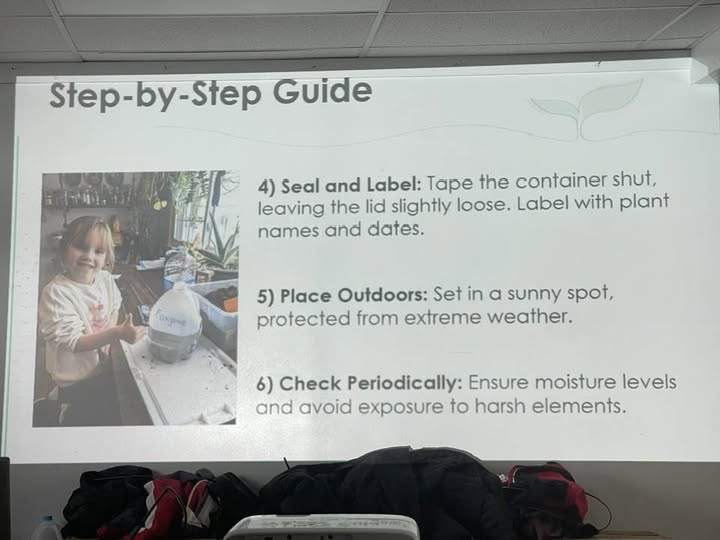
It was called the winter sowing workshop. The Grand Island Nature Alliance (GINA) ran this workshop last year and they did a rerun of it this year. It’s all about getting seeds for perennials started in jugs during the winter. We could bring up to three empty large clear plastic jugs for this experience.
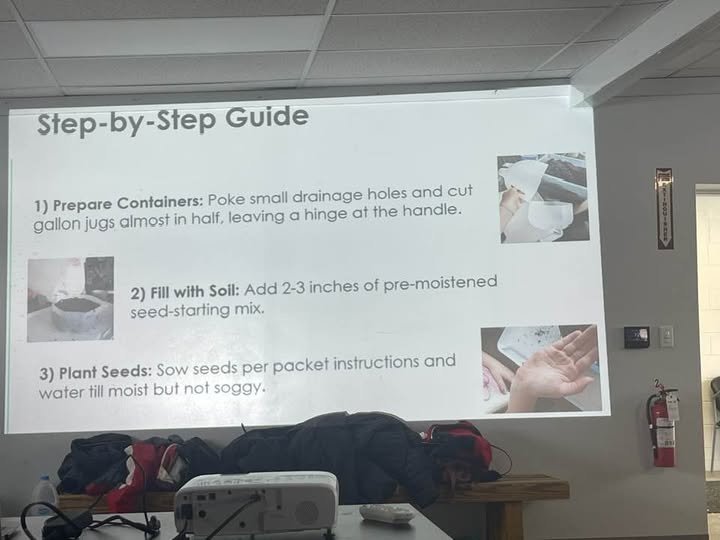
After we had our jugs prepared, we heard a half-hour presentation of the value of native plant species, as well as the benefits of starting our seeds early. It’s a cost effective method of starting plants in a natural type of environment. The jugs, which are left outside, act as a mini greenhouse for the seeds. They can last through snow and ice and rain and all sorts of weather conditions. Eventually, when the weather warms, you will start to see little plants germinate, which is very cool and also very exciting. The first time that I did winter sowing was last year, and when my baby plants began to germinate, I was so happy. It was like a little miracle of nature after a cold winter.
The seeds offered at the winter sowing workshop were: anise hyssop, butterfly weed, blue wild indigo, purple coneflower, liatris (blazing star), foxglove beardtongue, black eyed Susan, and New England aster.
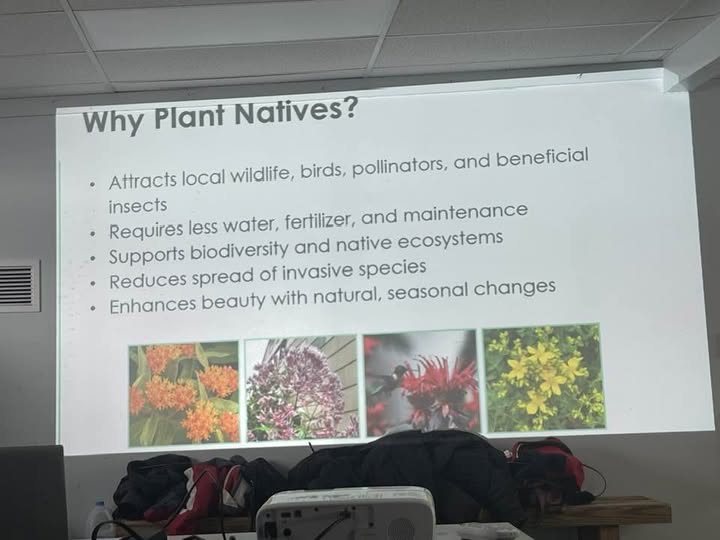
We had two presenters: Sonia Merkel, who talked about how she turned her yard into a pollinator-friendly garden full of native plant species, and Peggy Koppmann, who talked about the benefits of growing native plant species. Some of the benefits are in the below picture, which was one of the images shared in the powerpoint presentation.
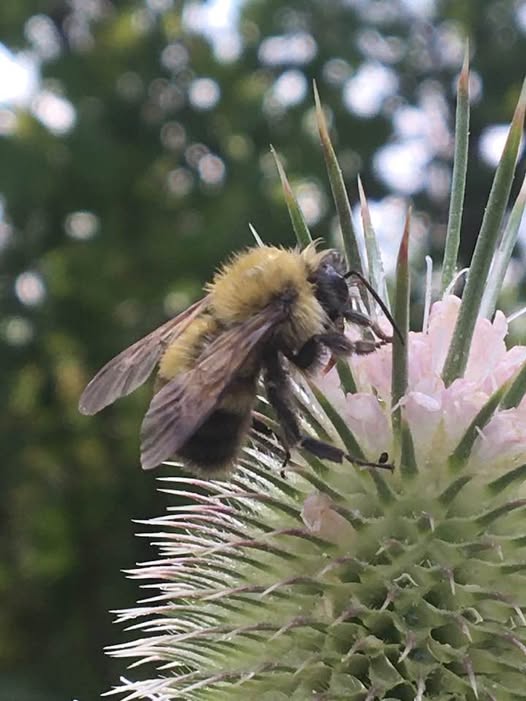
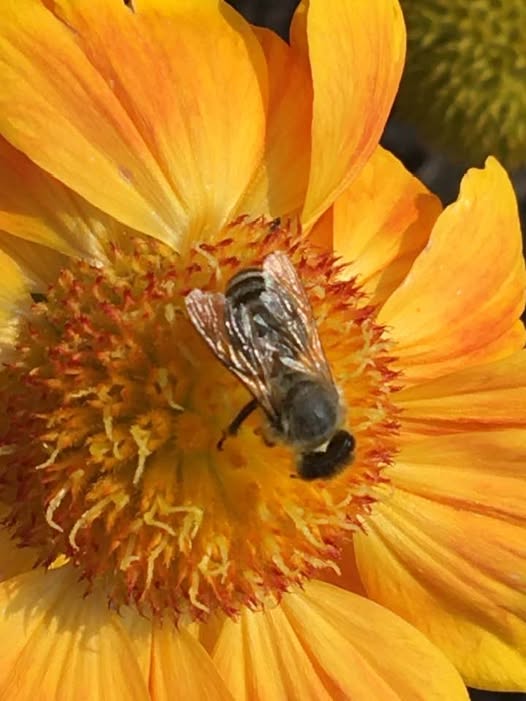
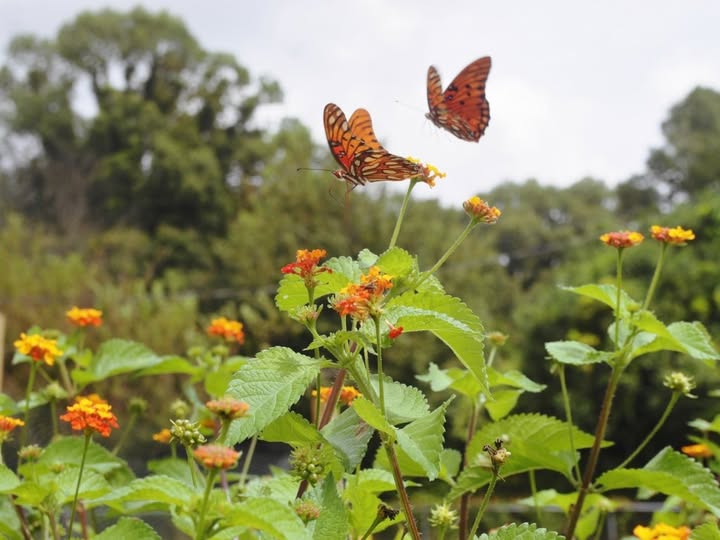
Peggy pointed out that, if you’re not allergic to bees, don’t fear them. Generally, honeybees and bumblebees are not attack creatures. They are pollinators and they will just do their job and leave. Bumblebees are adorable, and, sometimes, they are good at posing for photographs. If there is someone in the household who is allergic to bees, the pollinator gardens should be placed at the far edge of the property, away from high trafficked areas.
I am so happy that I had this opportunity to think about spring and to get ready for this year’s garden. I’ve truly enjoyed blogging this month. I will try to post stories and pictures here twice a week until the next blogging challenge, which will happen in April. Thank you for reading and for commenting and for liking. I am so grateful.


Hey Alice, since I’m home this winter and will be here for spring, I’m planning to do some planting myself—so you may have to share a few of the tips you picked up at the workshop today. It’s such a lovely reminder that thinking ahead and getting our hands in the soil can be its own kind of encouragement.
I would love to share those tips!!! And yes, getting our hands in the soil feels so good!!!