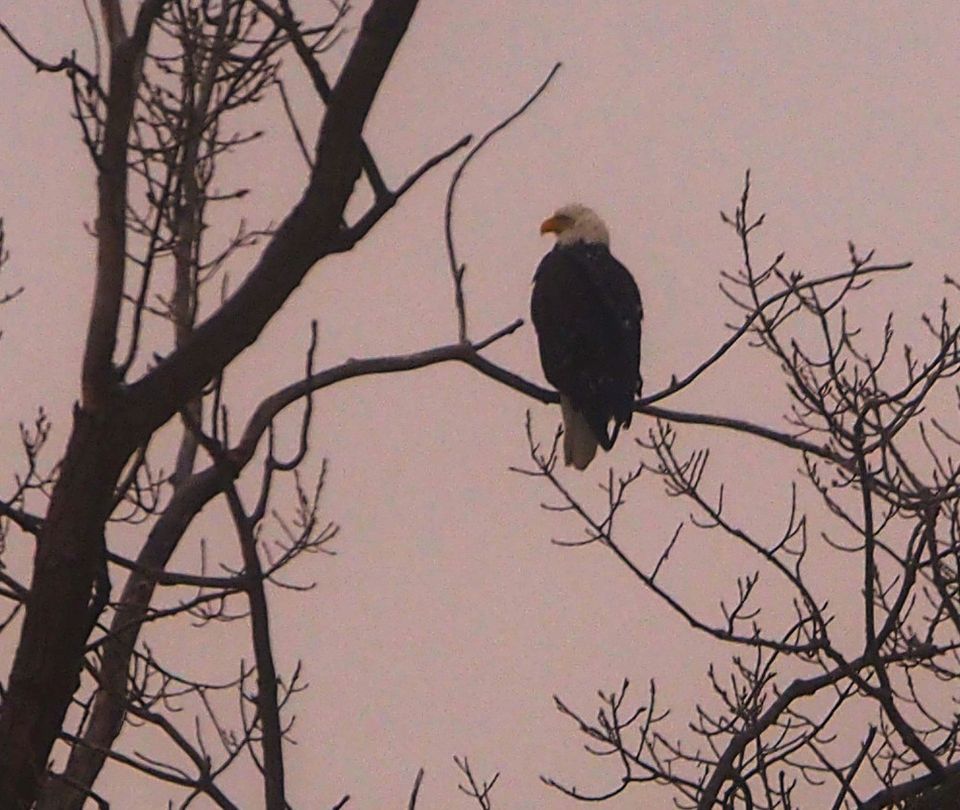
Today was a great day to explore Grand Island in winter. I had the opportunity to take a tour of Grand Island and to see the wildlife of the island and the river. I was able to photograph most everything I saw. The only thing that I didn’t have a chance to photograph was a bald eagle, who was a little too far away. Here’s an earlier picture of a bald eagle on Grand Island. The rest of the pictures were taken today.
This beautiful bald eagle is posing in profile. Or, at least, I’d like to imagine that this beautiful bald eagle is posing in profile. The exciting thing about bald eagles is that they are no longer either endangered or threatened. According to AI, “they remain protected under the Bald and Golden Eagle Protection Act and the Migratory Bird Treaty Act, which prohibit harming them, their nests, or eggs.” The population of bald eagles has been successfully restored, which is a wonderful thing. That needs to happen for other species of birds, such as golden eagles, peregrine falcons, and short-eared owls. We can definitely do better for our feathered friends.
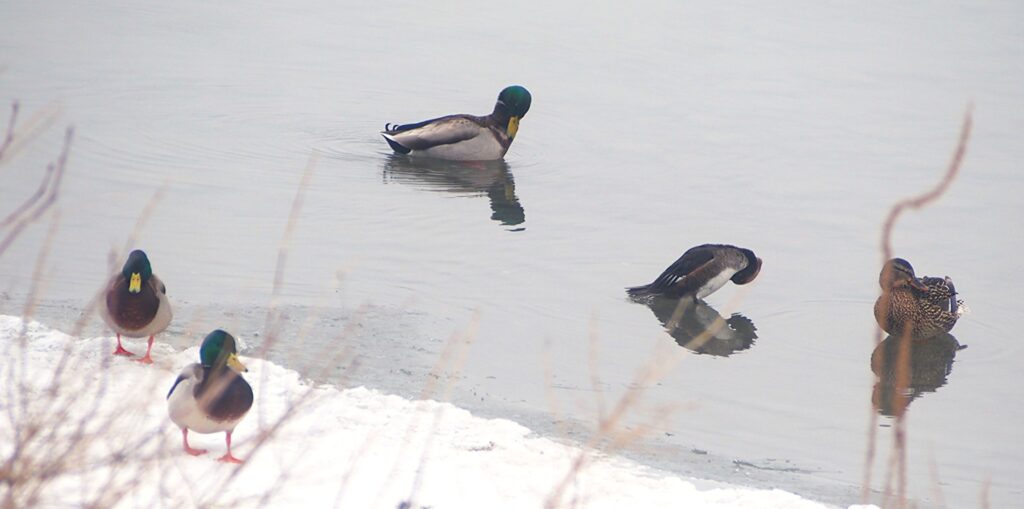
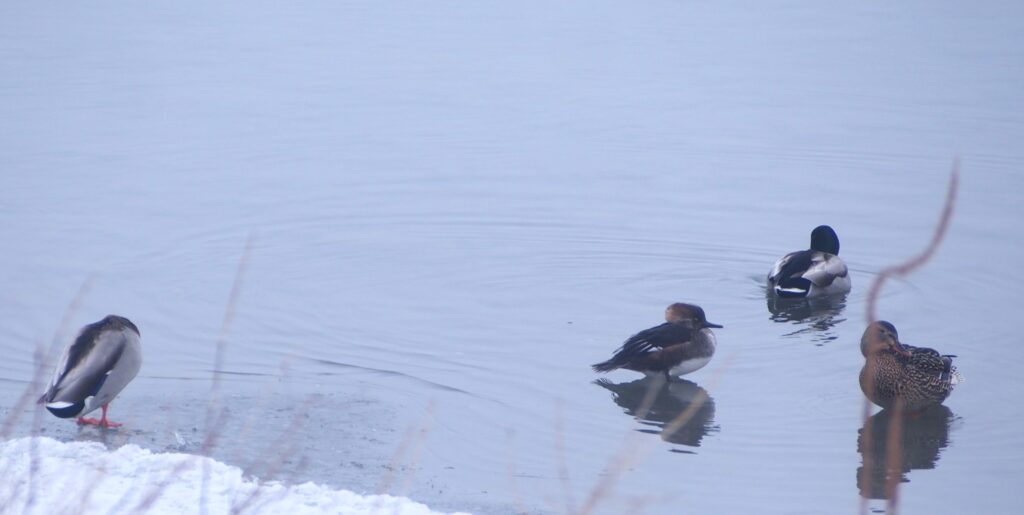
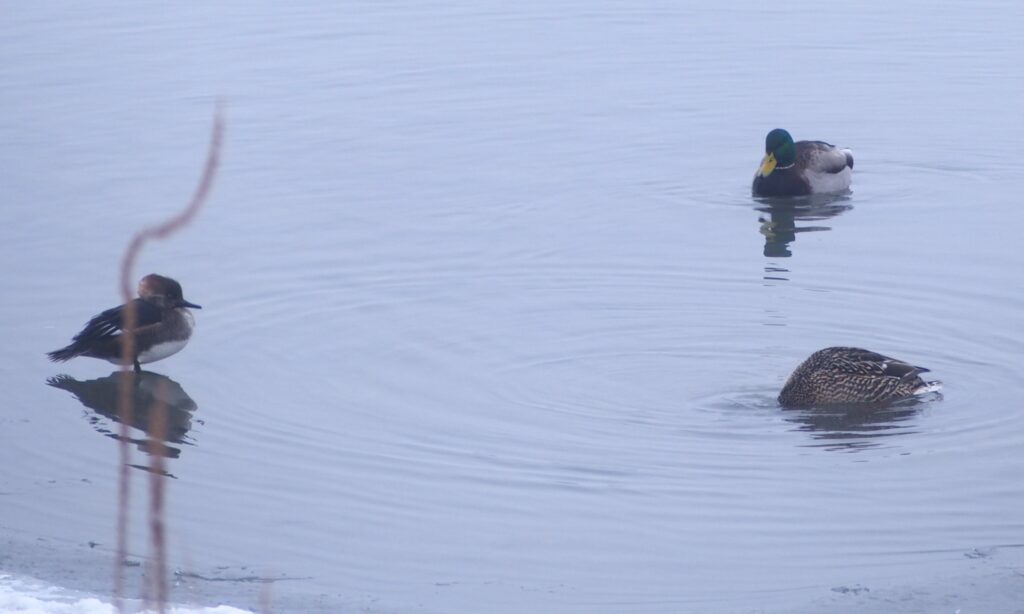
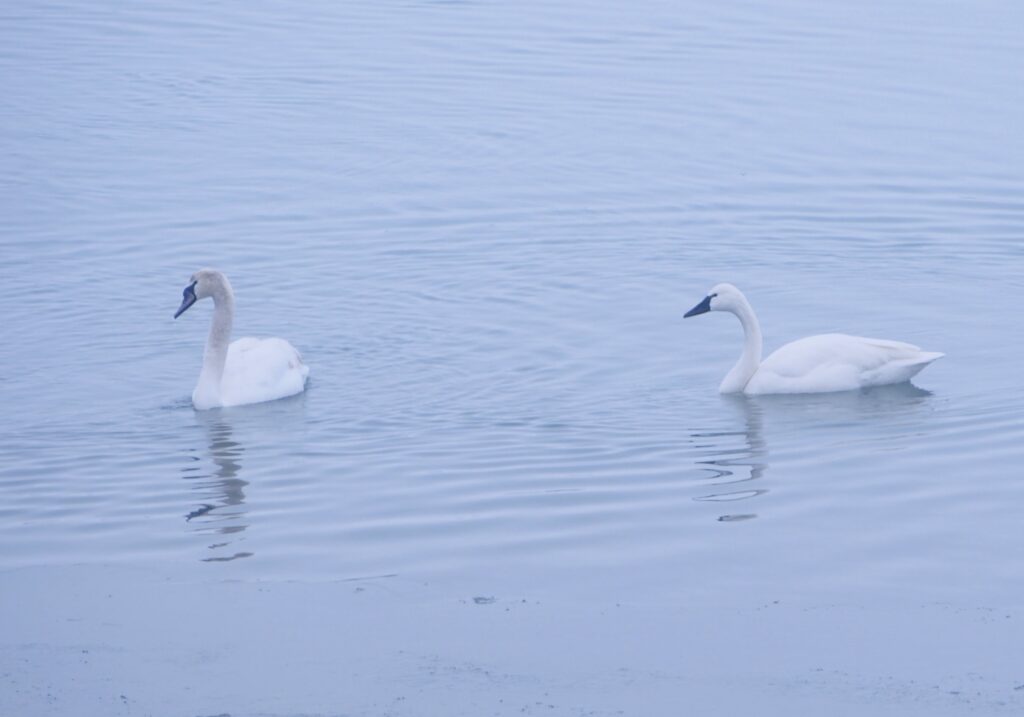
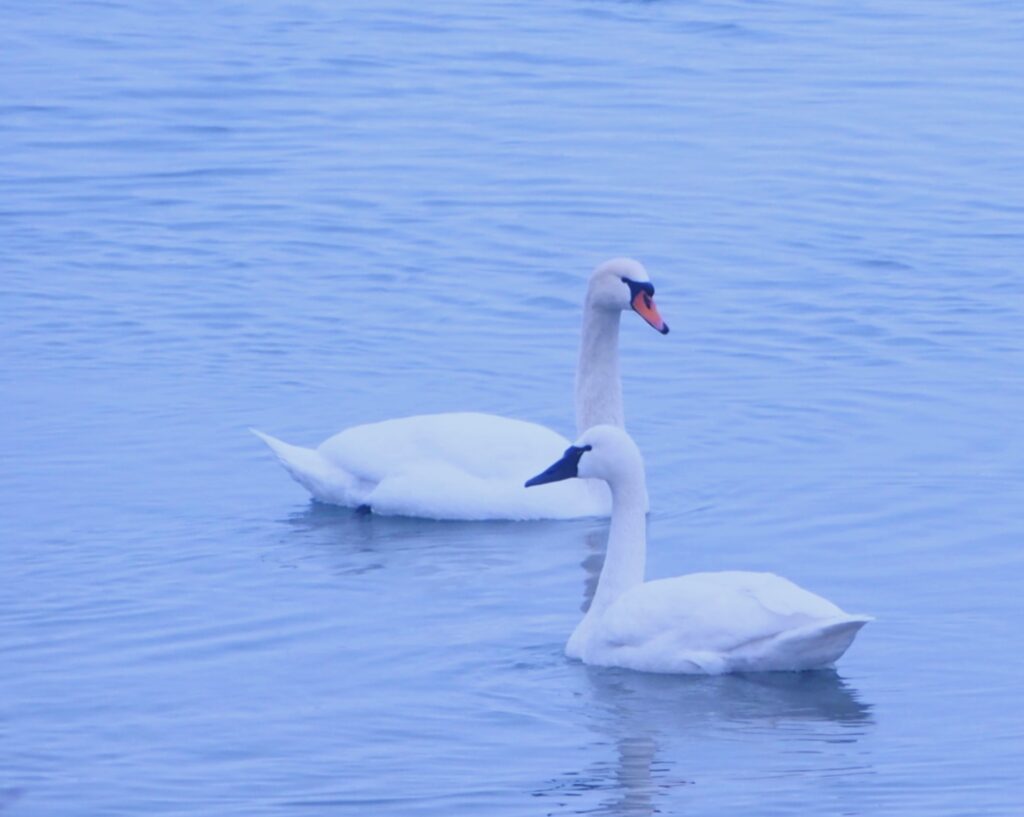
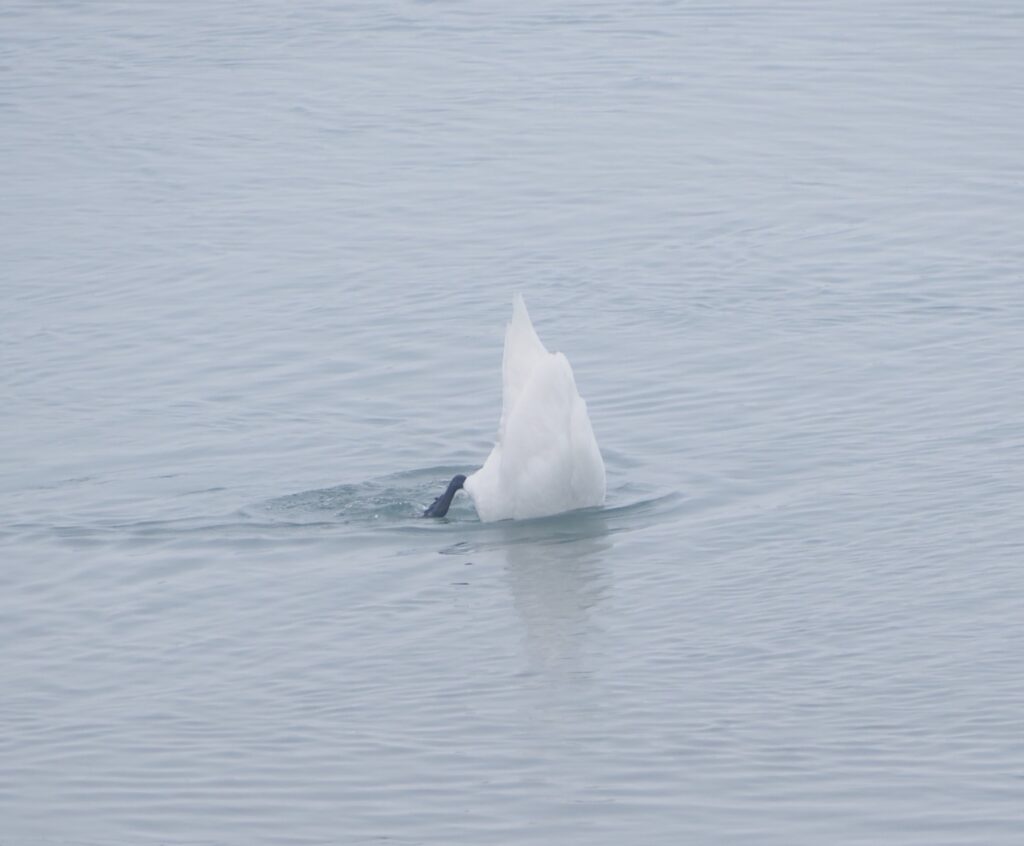
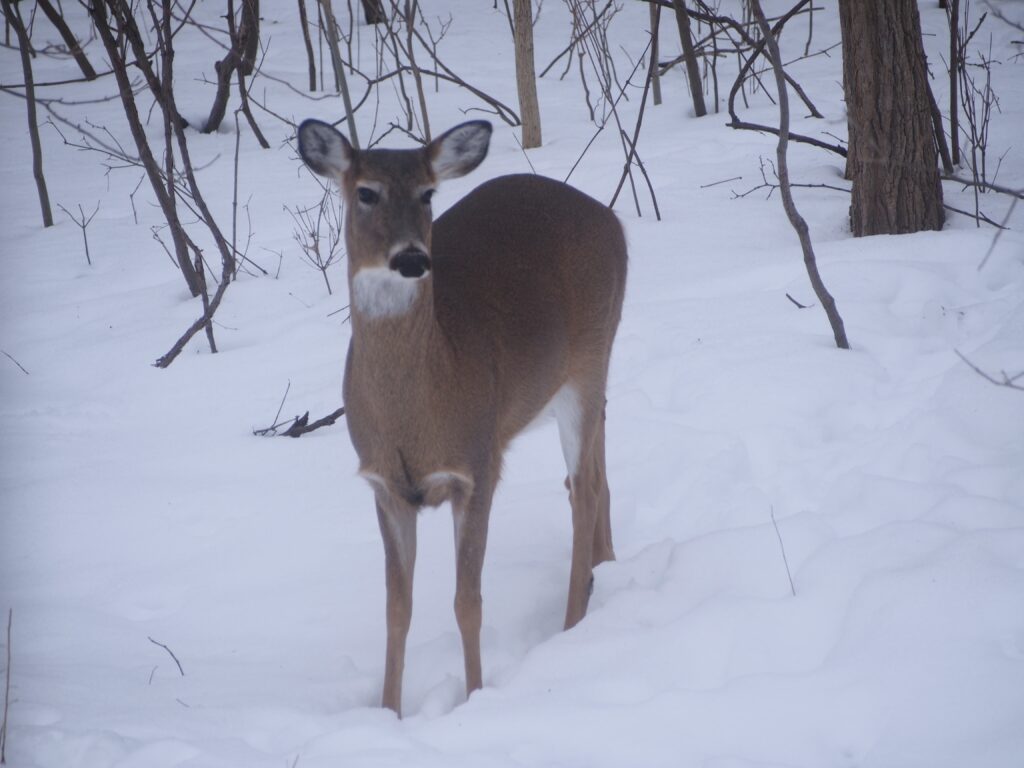
How about this group of ducks? There are several varieties of these migratory birds, which were enjoying a relatively warm winter day along Grand Island’s East River.Here is another view of the ducks. Some of the ducks that winter in the Niagara River are diving ducks, and others are dabbling ducks. Diving ducks go all of the way underwater, but dabbling ducks don’t. They tip forward and put their heads and necks underwater. Their tail end sticks straight up in the air. In my next picture, I will share an image of a duck in the process of dabbling.The dabbling duck has its head and neck submerged in the water. The rest of the duck is not submerged, which indicates that the bird prefers not to dive.Also along Grand Island’s East River, these tundra swans were enjoying a swim fairly close to shore. Tundra swans, which are a native species in North America, have black bills. In the summer, according to AI, tundra swans can be found in the high Arctic tundra of North America, spanning from northern Alaska to the Canadian Arctic Archipelago, including regions like the Yukon-Kuskokwim Delta and Baffin Island. They go to shallow ponds, lakes, and marshes to breed and to raise their young.Today, tundra swans and mute swans (a nonnative species) were swimming together in the river. The mute swan can be identified by its orange bill. Swans also like tipping over and exploring the food found underwater.In addition to the birds, look at who else was out and about today? This deer wanted to follow another deer. But this deer stood at the side of the road, uncertain of whether to cross or not. The other deer had already crossed the road and had run off into the woods of Buckhorn Island State Park.
I hope that you’ve enjoyed the local wildlife. Take an adventure around your community. There are some pretty awesome things to see closer than you imagine.